Blog
Cat6 vs Cat6A: which cable should your office use?
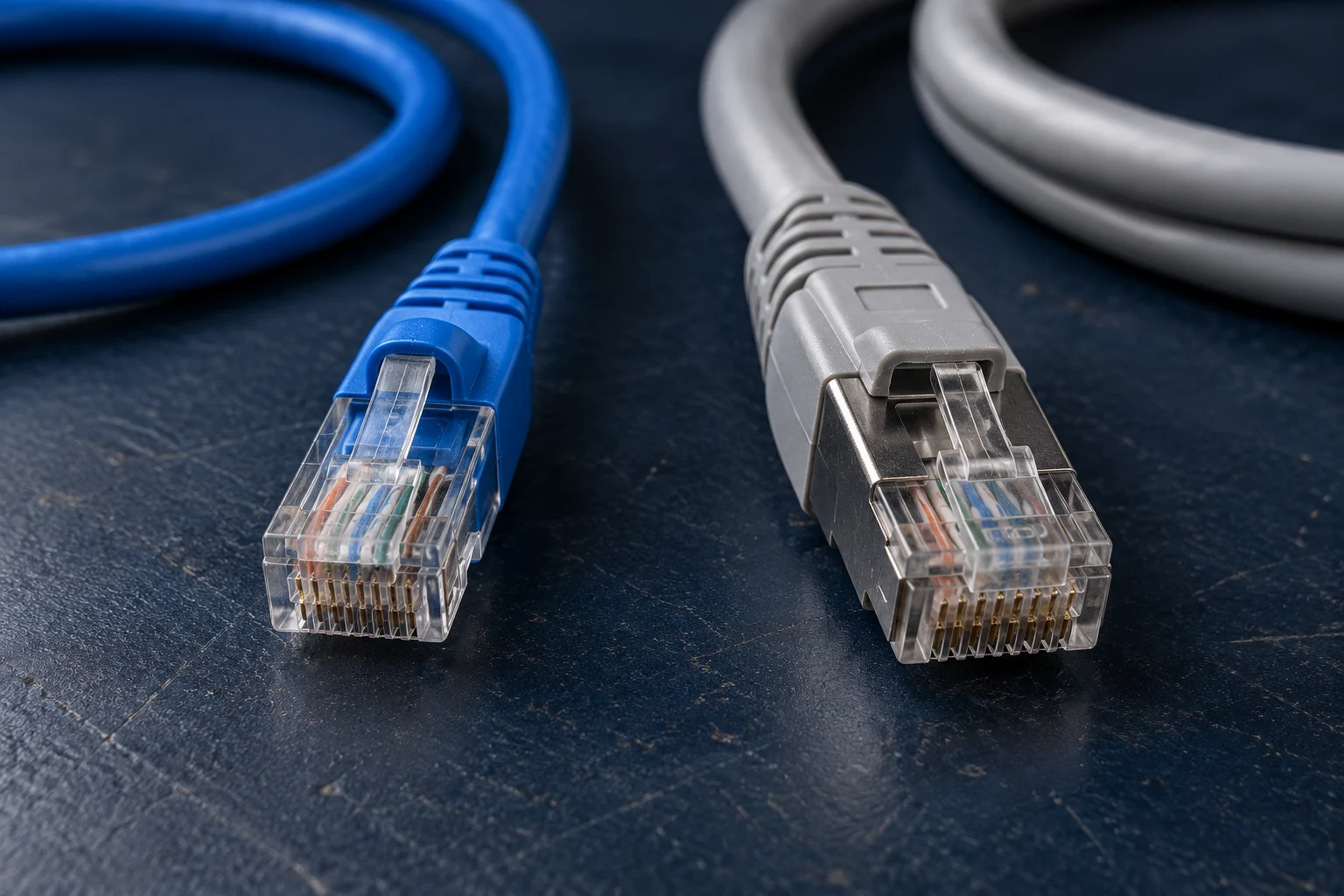
Both are dependable when installed and certified properly. The right choice depends on the speeds you need, how far your runs go and how long the cabling must last.
JASS Networks team · Published · 5 min read
The short answer
Cat6 comfortably handles 1 Gbps to the desk, which is what most office outlets use today. Cat6A is the safer choice when you need 10 Gbps over the full channel length, when cables run in dense bundles, or when you expect the floor to outlive several generations of equipment.
Either way, the cable is only as good as the installation. A well-installed, certified Cat6 network beats a poorly terminated Cat6A one every time.
Speed and distance
Copper channels are limited to 100 metres: up to 90 metres of fixed cabling plus patch cords at each end. Cat6 is specified to 250 MHz and supports 10 Gbps only on shorter runs — typically up to about 55 metres, and less where many cables are bundled together.
Cat6A is specified to 500 MHz and supports 10 Gbps over the full 100-metre channel. If any of your runs are long and need high speeds, that alone can decide it.
Crosstalk and alien crosstalk
Crosstalk is interference between the pairs inside a cable. Alien crosstalk is interference between neighbouring cables in the same tray or bundle. At 10 Gbps, alien crosstalk becomes the limiting factor.
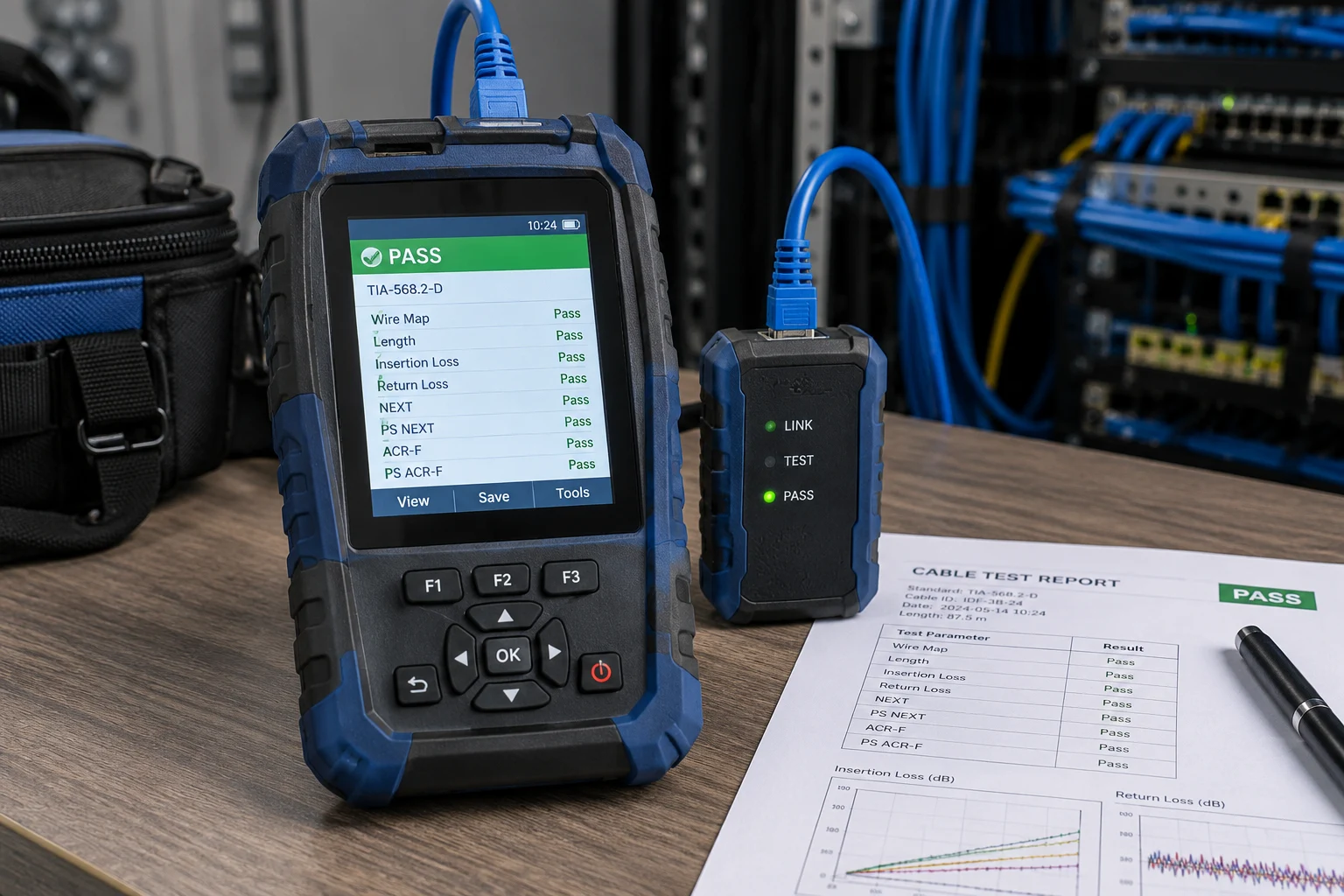
Cat6A is built to resist it, which is why it is the standard choice for high-speed enterprise floors. Certification testing measures PS-NEXT for every link, and alien crosstalk testing can be added where the specification requires it.
Size, weight and containment
Cat6A cable is thicker and heavier than Cat6. It takes more space in trays and conduits, needs a larger bend radius and adds weight to containment. Plan tray fill and rack space for it from the start — retrofitting Cat6A into containment sized for Cat6 often doesn't work.
Cost
Cat6A costs more per metre and takes longer to terminate. But cable is a small part of a project compared with labour, containment and disruption — and replacing cabling later means opening ceilings and working around live operations again. For a floor you expect to keep for many years, the extra upfront cost is often the cheaper option overall.
How to decide
Use these as a starting point, then confirm during the site survey:
- Choose Cat6 for standard desk outlets running 1 Gbps, with moderate run lengths and a shorter planned life.
- Choose Cat6A for 10 Gbps links, long runs, dense cable bundles and floors you expect to keep through future upgrades.
- Mixing is fine: many sites use Cat6 for desks and Cat6A for uplinks and high-bandwidth areas.
Whatever you choose, insist on these
The category sets the ceiling; workmanship decides whether you reach it.
- Bend radius kept to at least four times the cable diameter.
- Pairs untwisted less than 13 mm at each termination.
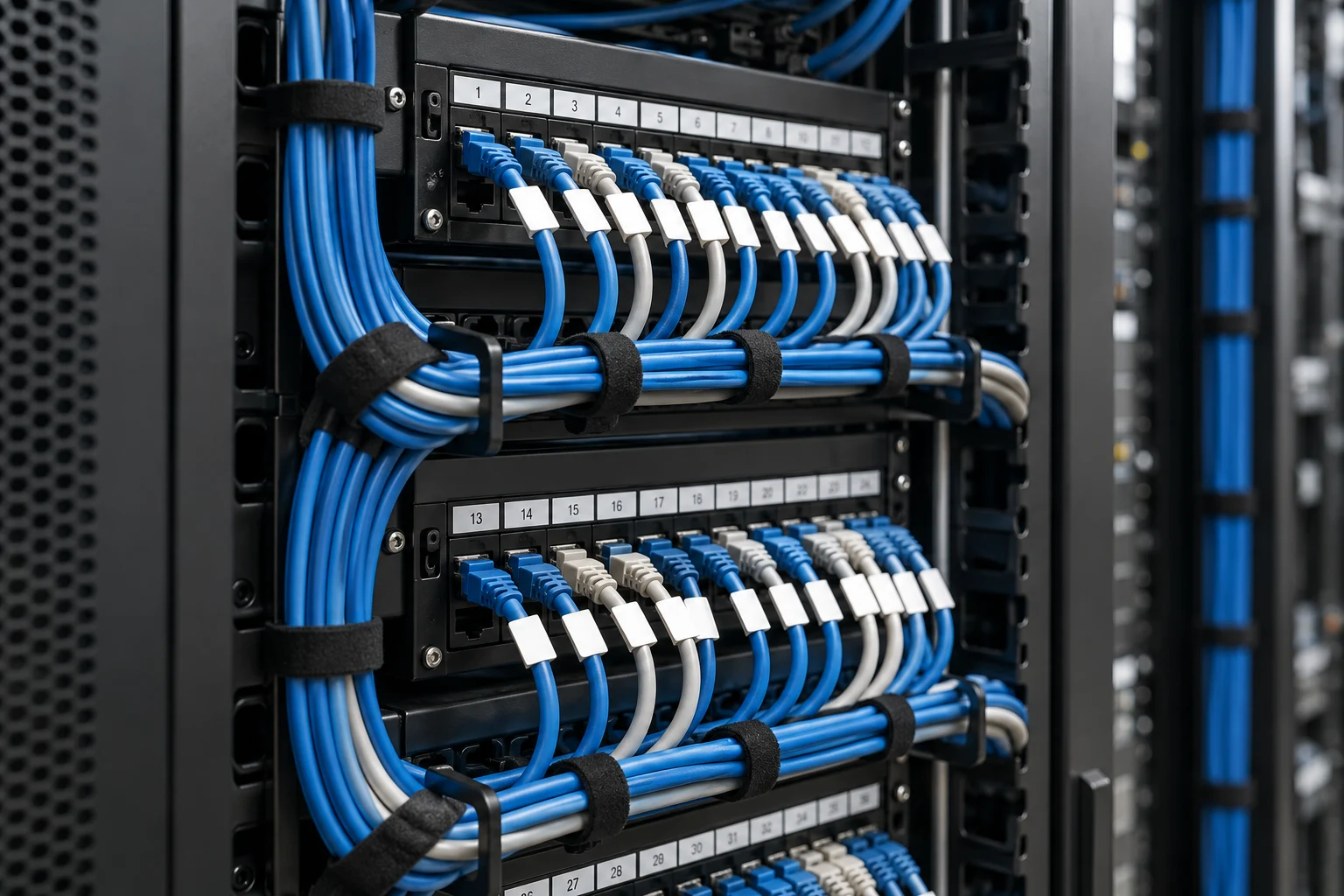
- Velcro, not zip-ties, so cables aren't crushed.
- Every link labelled at both ends and certified, with the original Fluke .FLW test files handed over.
Planning a project like this?
Tell us about your site and we'll recommend the right approach — from survey and design to installation and certified handover.