Blog
Voice cabling in modern offices: IP phones, extensions and records
Even with IP phones, many buildings still rely on traditional voice cabling. Here's how to plan both, and the records that make every change easy.
JASS Networks team · Published · 4 min read
Is voice cabling still needed?
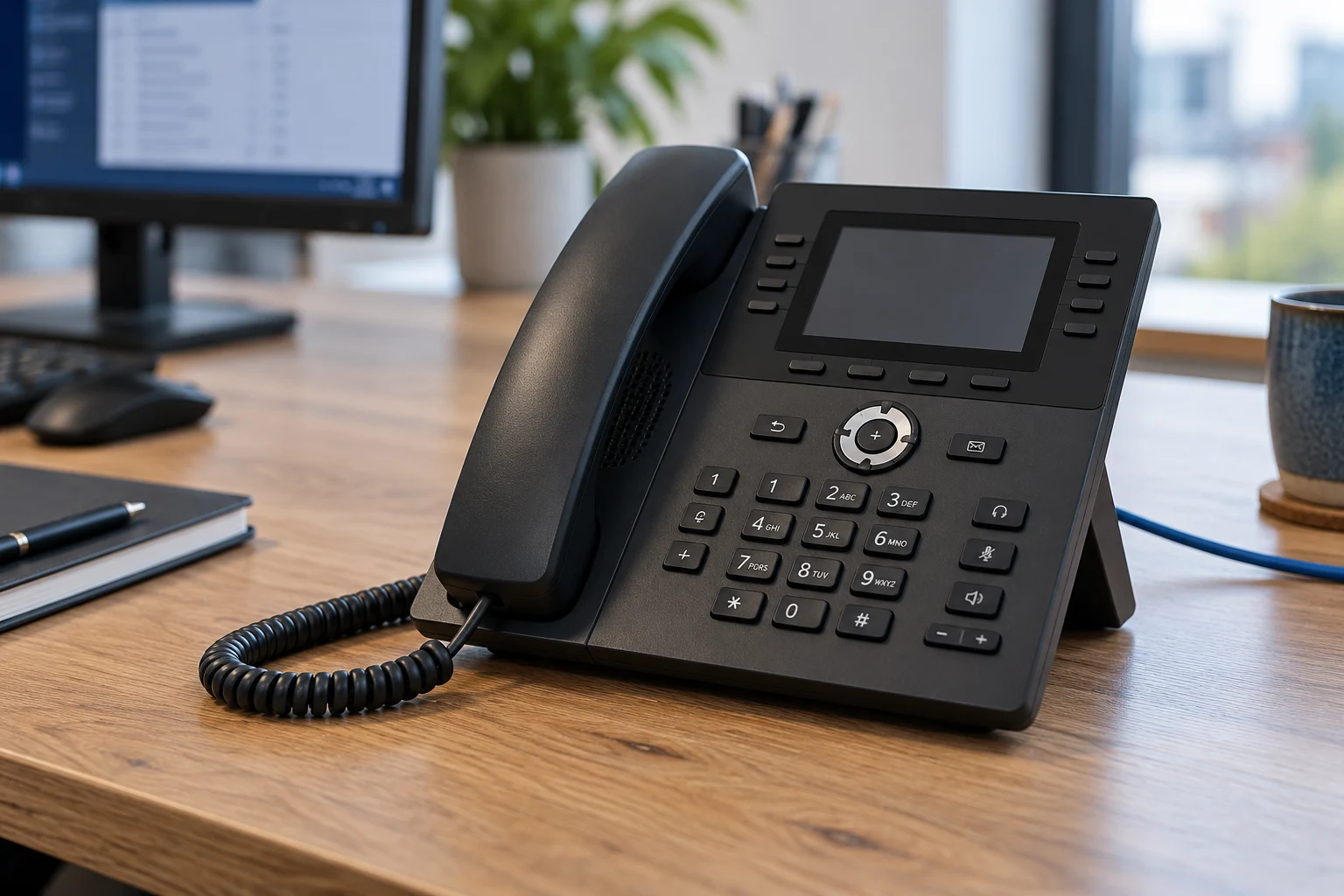
Many offices now use IP phones that plug into the same data outlets as computers, often powered over the network cable. But analogue extensions, PBX or EPABX systems, lift phones, intercoms and alarm lines still depend on traditional voice cabling in many buildings.
Two ways to cable for voice
- IP phones: connected to standard structured cabling outlets and patched to a network switch, like any other device.
- Traditional extensions: a multi-pair backbone cable from the main frame to each floor or area, then single-pair extension runs to each phone position.
Terminations that last
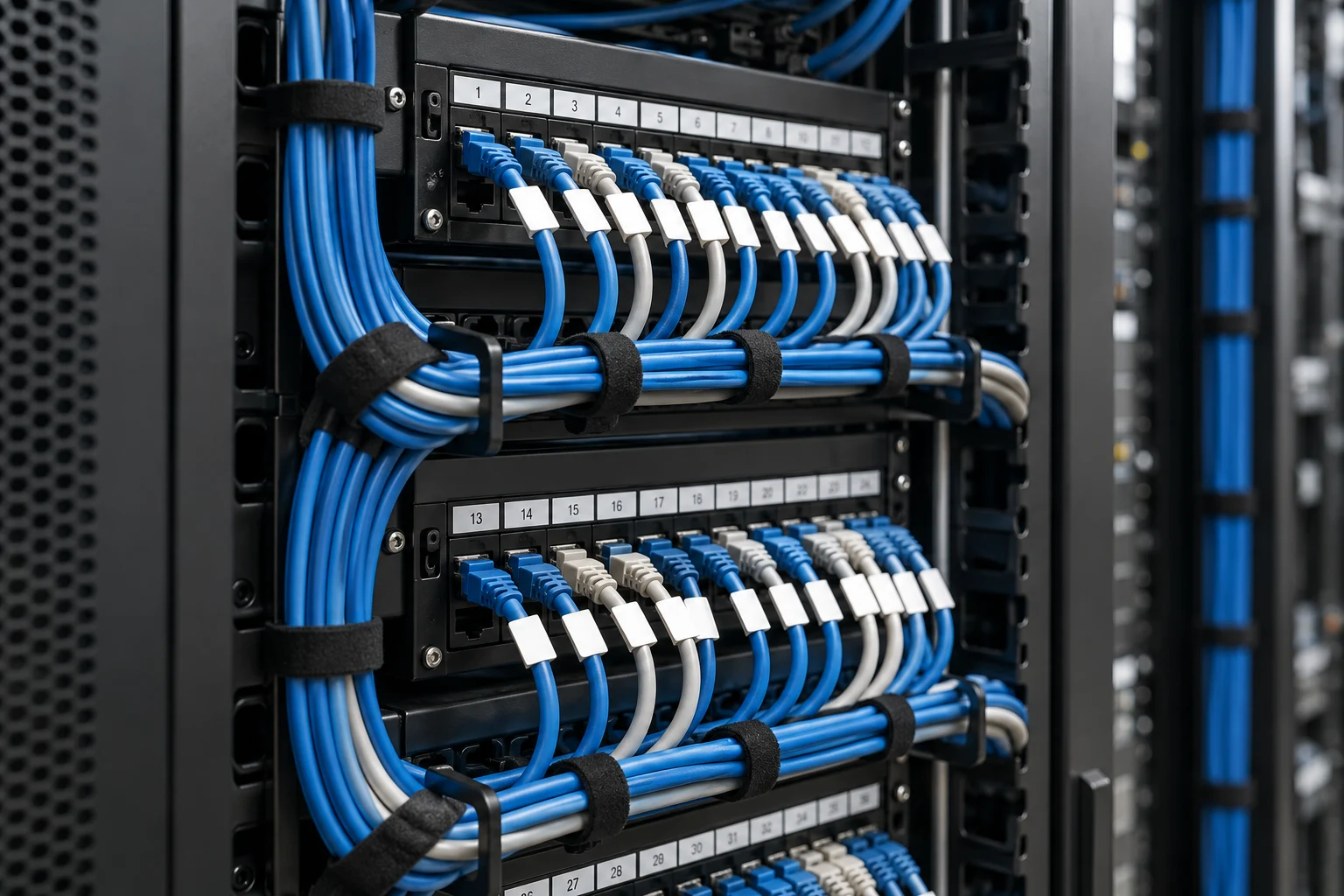
Voice pairs are terminated on IDC strips or by wire-wrap (gun wrapping). Both give reliable, permanent connections when done properly. What matters most is that every pair is numbered and the numbers are recorded.
Plan spare capacity
Install backbone cables with spare pairs, so extensions can be added or moved without running new cable. Agree in advance how cross-connections between the backbone and extensions will be made and recorded.
Records that save time
Keep a register that maps each extension number to its backbone pair, termination position and outlet. With it, moving or fixing an extension takes minutes; without it, every change starts with tracing wires.
Checklist
- List what still needs traditional voice lines: extensions, lifts, alarms, intercoms.
- Decide which phones will move to IP over the data cabling.
- Size the multi-pair backbone with spare pairs.
- Choose the termination method and numbering scheme.
- Hand over an up-to-date extension register.
Planning a project like this?
Tell us about your site and we'll recommend the right approach — from survey and design to installation and certified handover.