Blog
Fiber testing explained: Tier 1 vs Tier 2 certification
A fiber link that lights up isn't necessarily a good link. Here's what each test tier proves, and what to look for in the report you receive at handover.
JASS Networks team · Published · 5 min read
Why test fiber at all?
Every connector and splice loses a little light. A dirty end-face, a poor splice or a tight bend can lose much more. The link may still work on day one, yet fail when equipment is upgraded or the margin shrinks over time.
Testing proves each link is within its loss budget and gives you a baseline to compare against if a problem appears later.
Tier 1: loss testing with an OLTS
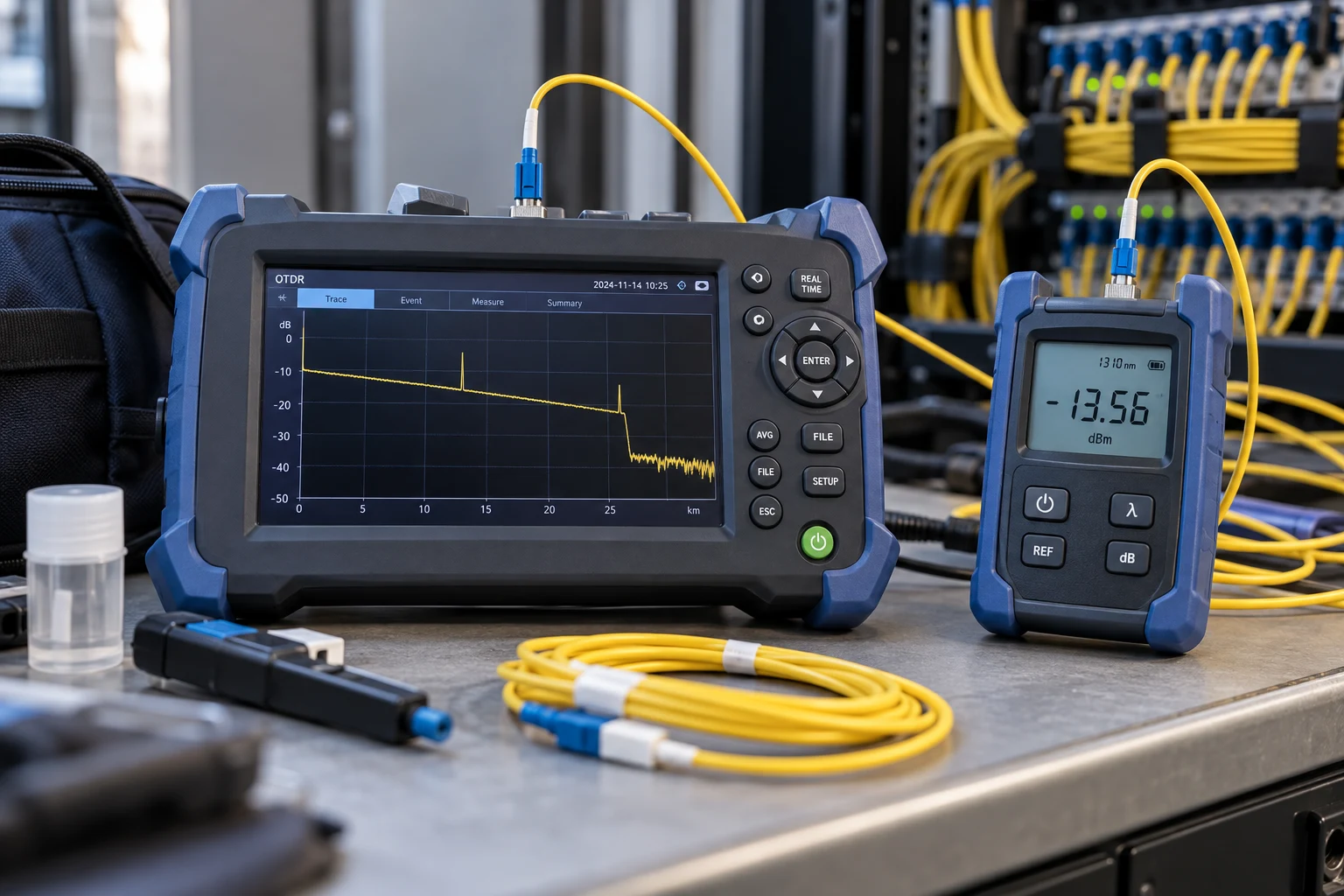
Tier 1 uses an optical loss test set (OLTS): a light source at one end and a power meter at the other. It measures the total light loss of the link in decibels (dB) and confirms length and polarity.
The result is compared with the allowed loss for that link, calculated from its length and the number of connectors and splices. It's a clear pass or fail — and it's the test that most specifications require for acceptance.
Tier 2: OTDR traces
Tier 2 adds an optical time-domain reflectometer (OTDR). Instead of one total figure, it produces a trace along the length of the fiber, showing every connector, splice and bend, with the loss and reflectance of each event and where it is.
That makes it possible to prove workmanship — such as the quality of each fusion splice — and to locate a fault precisely without guesswork.
Which do you need?
- Tier 1 for every new link, as the acceptance test.
- Tier 2 as well for backbones and links between buildings, where splices are involved, or where your client or auditor asks for proof of workmanship.
- Tier 2 when troubleshooting an existing link, to find exactly where the loss is happening.
What a proper report should include
Ask for these at handover, and check them before signing off:
- Link identifiers that match the labels on the LIUs and cores.
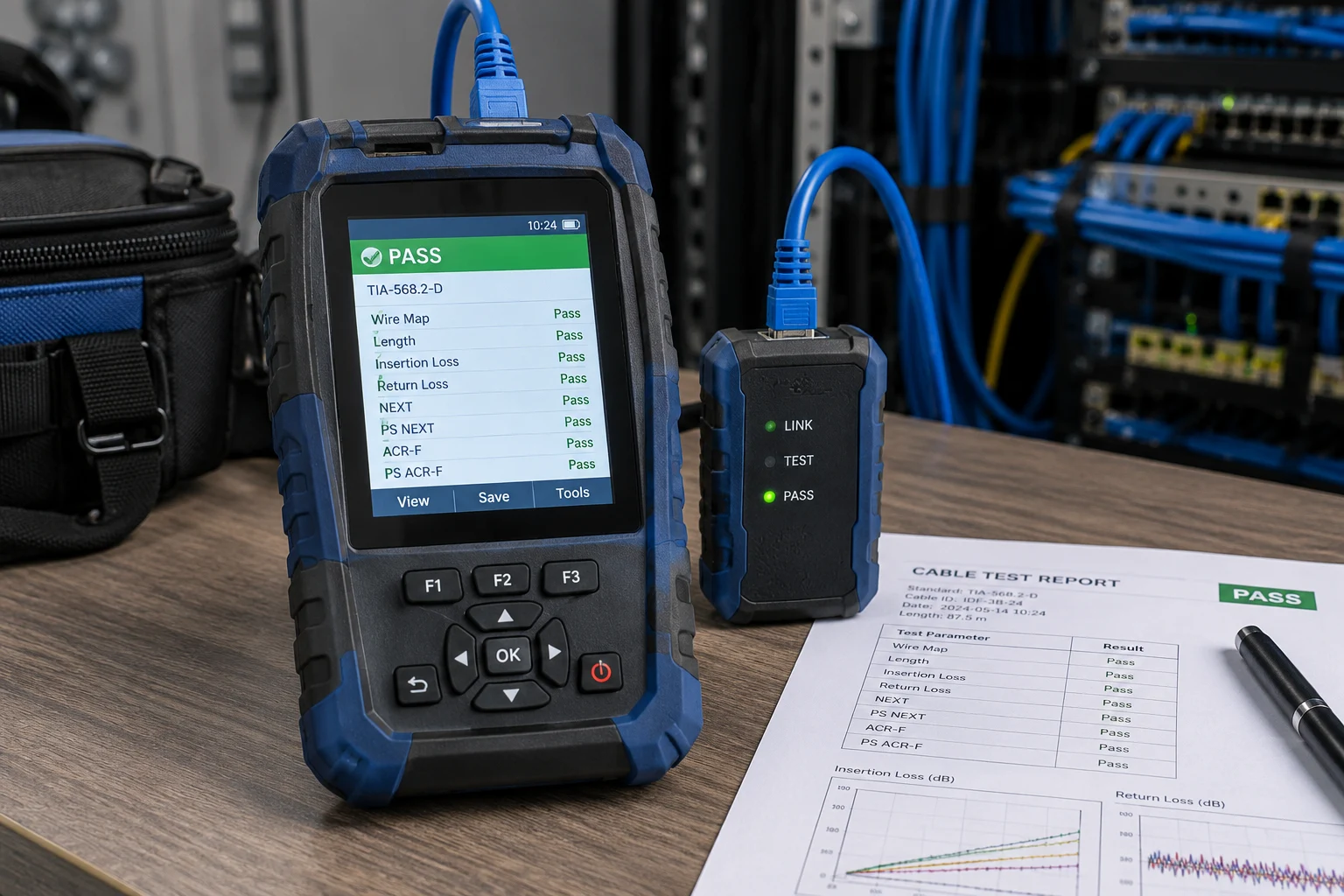
- Measured loss against the limit for every link, with a pass or fail result.
- OTDR traces for each link where Tier 2 testing was specified.
- The test method, equipment used and its calibration date.
- The original test files from the tester — not just a PDF summary — so results can be re-checked later.
Red flags
Be cautious of results without link identifiers, a single summary line for a whole building, or readings that are suspiciously identical across many links. Good testing produces a record for every link that you can trace back to a physical port.
Planning a project like this?
Tell us about your site and we'll recommend the right approach — from survey and design to installation and certified handover.